
Oven Temperature Converter — °F, °C & Gas Mark
The first time I tried baking from a recipe a friend in London sent me, I nearly ruined an entire batch of scones because she’d written “Gas Mark 6” and I had no idea what that meant on my American oven dial. I ended up doing the math by hand with a sticky note and a calculator, which is a terrible way to start a Saturday morning bake.
Recipes from different countries use different temperature scales: Fahrenheit in the US, Celsius almost everywhere else, and Gas Mark across the UK and parts of Europe. On top of that, most home ovens run anywhere from 15 to 25 degrees off from what the dial actually shows, so even a “correct” conversion is really just your best starting point. I built this so you never have to do that math on a sticky note like I did — type in whatever number your recipe gives you, and the other two scales update instantly.
Gas Mark is a stepped scale, not a precise number, so the value shown is the closest standard mark to your °F/°C input.
How to Use This Converter
Type your recipe’s temperature into whichever box matches what you have — Fahrenheit if you’re following a US recipe, Celsius for most international ones. The other scale updates automatically, and the nearest Gas Mark appears alongside it for UK-style recipes. The six quick-select buttons cover the most common baking temperatures if you just need a fast lookup.
Quick Reference: Fahrenheit, Celsius & Gas Mark
| Fahrenheit | Celsius | Gas Mark | Description |
|---|---|---|---|
| 225°F | 110°C | ¼ | Very low / slow cooking |
| 275°F | 140°C | 1 | Low |
| 300°F | 150°C | 2 | Low |
| 325°F | 165°C | 3 | Moderate |
| 350°F | 180°C | 4 | Moderate — most cookie & cake recipes |
| 375°F | 190°C | 5 | Moderately hot |
| 400°F | 200°C | 6 | Hot |
| 425°F | 220°C | 7 | Hot |
| 450°F | 230°C | 8 | Very hot |
| 475°F | 245°C | 9 | Very hot |
Frequently Asked Questions
What is Gas Mark and why do some recipes use it?
Gas Mark is a temperature scale used mainly in the UK and Ireland for gas ovens, running from about Mark ¼ up to Mark 9. It doesn’t convert to an exact Fahrenheit or Celsius number since it was designed around gas oven settings rather than precise degrees, so treat it as a close equivalent rather than an exact match.
Why does my oven seem hotter or cooler than the temperature I set?
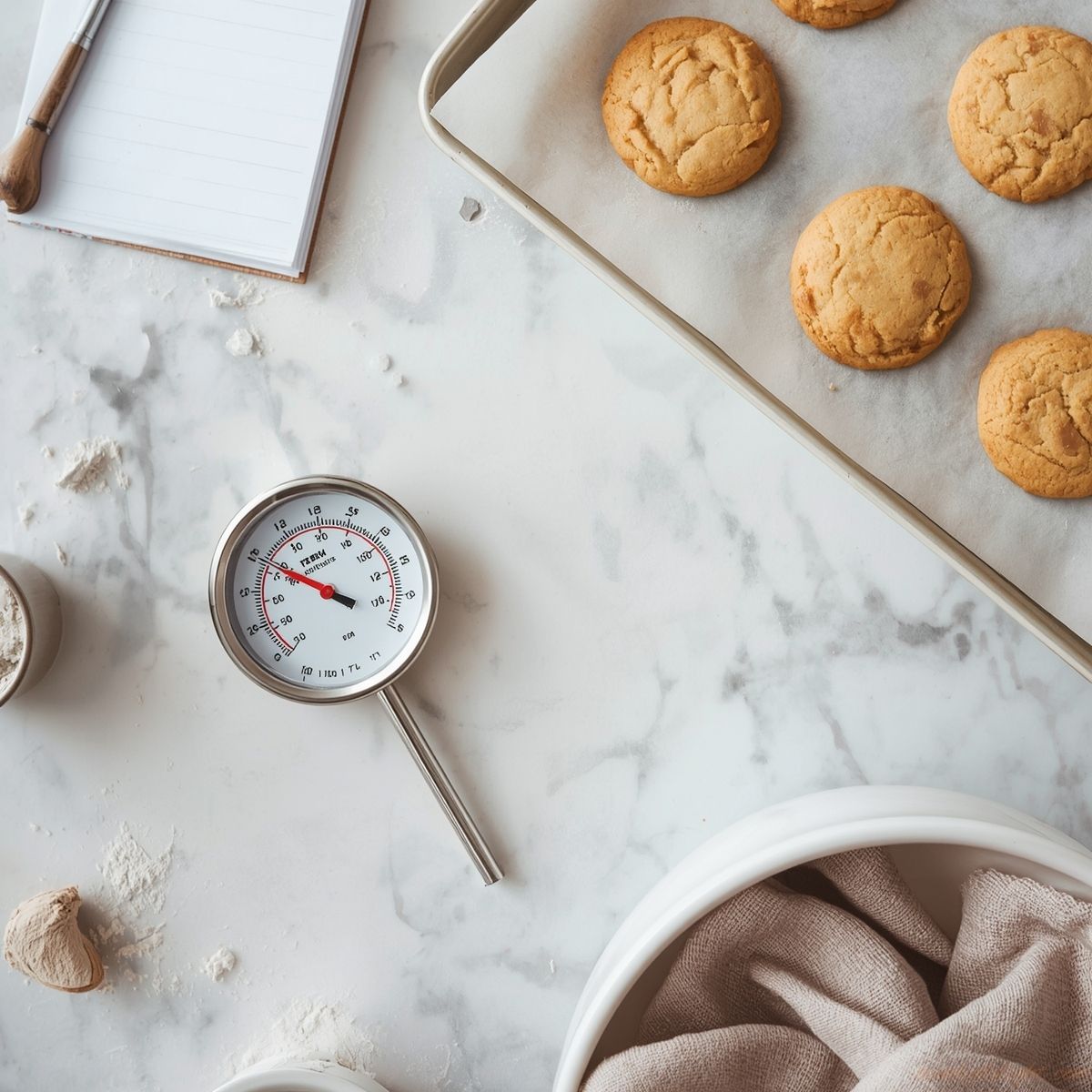
Most home ovens run anywhere from 15 to 25 degrees off from the dial, and that gap usually gets worse as the oven ages. An inexpensive oven thermometer placed on the middle rack is the easiest way to find out exactly how far off yours runs.
Should I adjust the temperature for a convection oven?
Generally yes. Convection ovens circulate hot air, which bakes more evenly and quickly, so most recipes suggest lowering the temperature by about 25°F (around 15°C) or reducing the bake time slightly if you’re using true convection.
What’s the difference between baking at 350°F and 375°F?
Even a small temperature difference changes how quickly the outside sets versus how long the inside takes to finish. Higher temperatures give crisper edges and faster bakes, while lower temperatures bake more evenly through but take longer — which matters most for delicate items like cheesecakes or custards.
More Kitchen Tools
Recipes to Try
A Few Reminders From My Kitchen
Putting batter into a cold oven can ruin your bake completely — give it the full preheat time.
An inexpensive oven thermometer reveals exactly how far off your dial really runs.
Happy Baking! 🧡